The United States Residential Property Market Analysis 2026
While supply growth remains insufficient to materially ease the long-standing shortage, sales prices in the US housing market continue to lose momentum, and transaction activity stays subdued due to still-elevated financing costs and stretched affordability.
This extended overview from Global Property Guide covers key aspects of the US housing market and takes a closer look at its most recent developments and long-term trends.
Table of Contents
- Property Prices and Price Index
- Historic Perspective
- Property Demand Trends
- Property Supply Trends
- Rental Market: Rents and Rental Yields
- Mortgage Market and Interest Rates
- Economic and Social Factors
Property Prices and Price Index
US house price growth continued to lose momentum in early 2026, weighed down by elevated borrowing costs, stretched affordability, weak transaction activity, and gradually improving inventory. However, limited resale supply continued to cushion values, preventing a broad-based correction even as nominal appreciation slowed below inflation.
The S&P Cotality Case-Shiller Index, the most widely followed benchmark of US home prices, reported a 0.91% year-on-year increase in January 2026 on a seasonally adjusted basis, equivalent to a 1.44% decline in real terms when adjusted for inflation. Commenting on the latest results, Nicholas Godec, Head of Fixed Income Tradables & Commodities at S&P Dow Jones Indices, noted that price levels remained elevated, but the pace of appreciation had slowed materially. “Nominal prices are barely rising; in real terms, they are edging lower,” he said, adding that affordability constraints showed little sign of easing while 30-year mortgage rates remained close to 6%.
The United States house price annual change:
The slowdown was also visible across the major city composites. In January 2026, the 10-City Composite posted a 1.72% year-on-year increase, down from 1.99% in December 2025, while the 20-City Composite recorded a 1.18% gain, compared to 1.43% in the previous month. Geographic divergence remained pronounced. New York recorded the strongest annual gain among the 20 tracked cities, at 4.93%, followed by Chicago at 4.63% and Cleveland at 3.56%. Tampa posted the weakest performance, with prices down 2.54% year-on-year.
S&P Cotality Case-Shiller Home Price Indices in 20 metro areas:
| Metro Area | YoY, % January 2026 |
5Y annualized, % January 2026 |
Metro Area | YoY, % January 2026 |
5Y annualized, % January 2026 |
|
| Atlanta | -0.14% | 7.62% | Miami | -0.91% | 9.91% | |
| Boston | 1.32% | 6.41% | Minneapolis | 2.50% | 4.49% | |
| Charlotte | 1.13% | 8.73% | New York | 4.93% | 8.09% | |
| Chicago | 4.63% | 7.44% | Phoenix | -1.59% | 6.96% | |
| Cleveland | 3.56% | 7.05% | Portland | -1.03% | 3.92% | |
| Dallas | -1.47% | 6.55% | San Diego | 0.51% | 7.69% | |
| Denver | -2.05% | 4.56% | San Francisco | -0.42% | 3.63% | |
| Detroit | - | - | Seattle | -0.62% | 5.49% | |
| Las Vegas | -0.95% | 6.92% | Tampa | -2.54% | 7.75% | |
| Los Angeles | 0.25% | 6.47% | Washington, D.C. | 0.19% | 5.00% | |
| Note: Due to ongoing transaction recording delays in Wayne County, the most populous county in the Detroit metro area, Cotality did not provide a valid January 2026 update for the Detroit S&P Cotality Case-Shiller Index. As a result, Detroit values are left blank in the table. | ||||||
| Data Sources: S&P Dow Jones Indices and Cotality. | ||||||
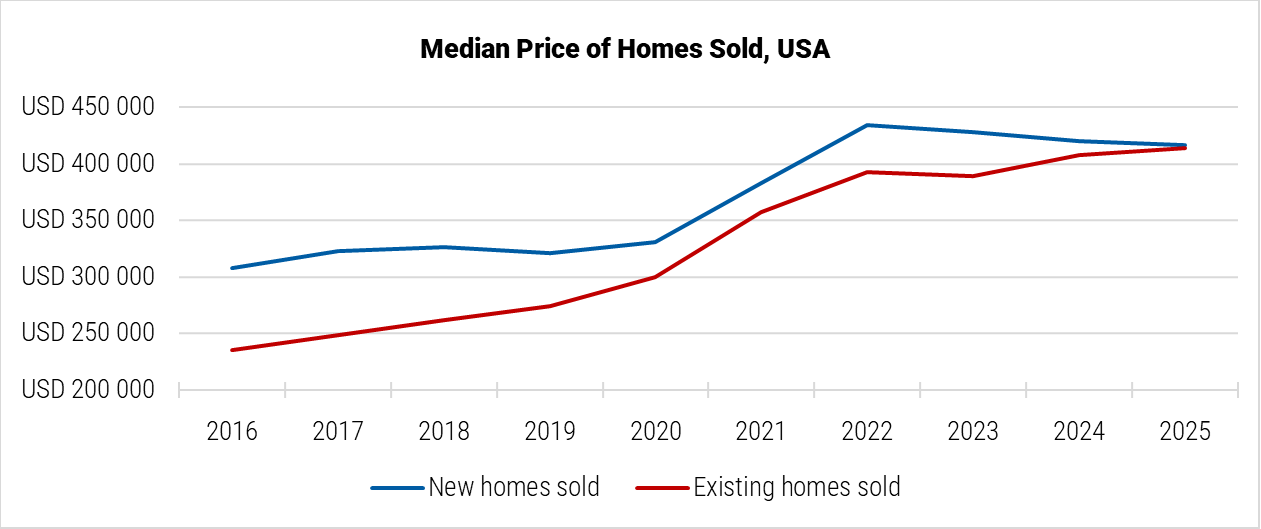
Segment-level pricing also shows how much the traditional gap between new and existing homes has narrowed. Data from the US Census Bureau and HUD indicated that the median price of newly sold single-family homes declined by 6.77% year-on-year to USD 400,500 in January 2026. By comparison, the median price of existing homes sold, reported by the National Association of Realtors (NAR), increased by 0.86% year-on-year to USD 396,800.
The dynamic reflects a shift in relative pricing power: builders have been more willing than owner-occupiers to cut prices or offer financing incentives in order to move inventory, while the resale market continues to be affected by the mortgage-rate lock-in effect. As NAHB Chairman Bill Owens noted, “builders are stepping up to make homes attainable,” while also calling attention to the supply-side challenges still affecting affordability. The resale market, meanwhile, remains constrained by the mortgage-rate lock-in effect, with just over half of outstanding mortgages still carrying rates of 4% or lower in Q4 2025.
Data Source: Global Property Guide based on the compilation of data from the US Census Bureau and the NAR.
Market expectations remain cautious. According to a March 2026 Reuters survey of housing analysts, US home prices, as measured by the S&P Cotality Case-Shiller 20-City Composite Index, are expected to rise by 1.80% in 2026, followed by a 2.50% increase in 2027. The forecast reflects a market constrained on both sides: affordability pressures continue to limit demand, while insufficient resale supply prevents a deeper price correction. James Knightley, Chief International Economist at ING, described the market as “basically not doing very much,” pointing to both weaker demand and constrained supply.
Historic Perspective:
From Boom-Bust Cycle to Affordability-Led Slowdown
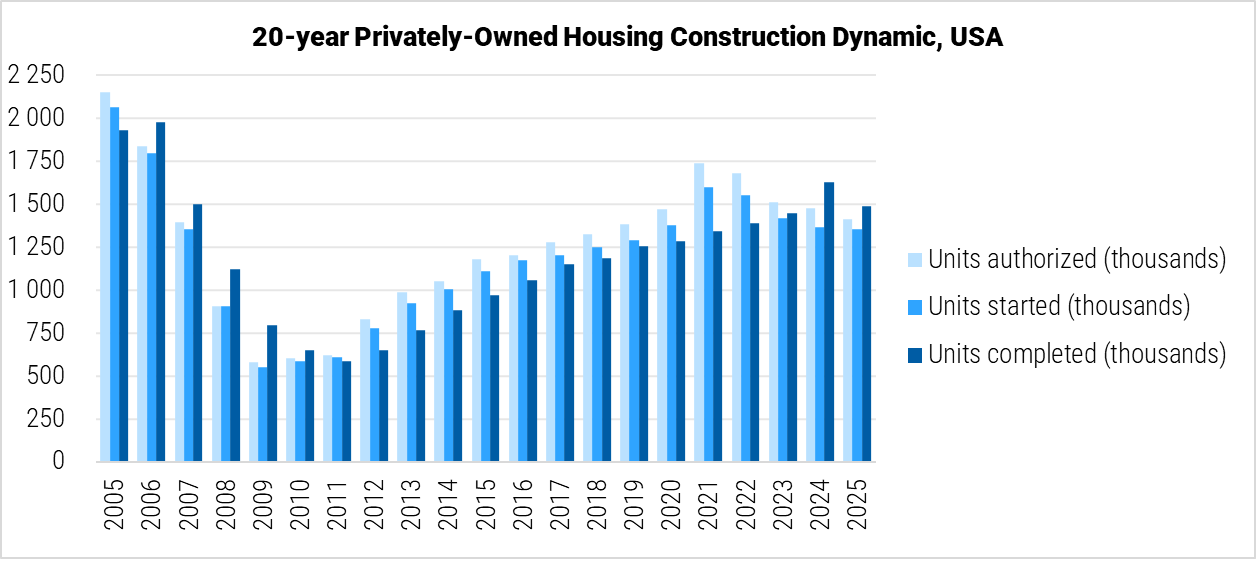
Over the past two decades, the US housing market has moved through four main phases: the pre-2008 speculative boom, the post-crisis correction and recovery, the pandemic-era surge, and the current affordability-driven slowdown. The mid-2000s expansion was fueled by easy credit, speculative buying, and rapid price appreciation, before the subprime mortgage crisis triggered a severe downturn. Home values fell sharply, foreclosures rose, and residential construction dropped to historic lows.
A gradual recovery followed in the 2010s, supported by low interest rates, improving labor market conditions, and the entry of younger households into the housing market. However, new construction recovered only gradually and remained insufficient relative to underlying demand, leaving the market structurally undersupplied by the time the COVID-19 pandemic reshaped housing preferences. Low borrowing costs, remote work, and demand for larger homes intensified activity in 2020–2021, driving prices higher.
The cycle changed again in 2022, when rapid monetary tightening lifted mortgage rates and significantly weakened affordability. Unlike the post-2008 downturn, the adjustment has been driven more by a sharp decline in market activity than by a broad fall in prices. Many buyers were priced out, while existing homeowners with low pandemic-era mortgage rates became reluctant to sell. As a result, sales weakened sharply, but limited resale supply helped prevent a deeper price correction.
By early 2026, the market remained historically expensive and affordability-constrained. Prices had moved well above their post-2023 trough, but growth had slowed materially, with weak sales, limited resale mobility, and a clearer split between constrained existing-home supply and more flexible new-build pricing.
S&P Cotality Case-Shiller Index:
| Index | 2022 Peak | 2023 Trough | Current | |||||
| Level | Date | Level | Date | From Peak, % | Level | From Trough, % | From Peak, % | |
| National | 308.07 | Jun-22 | 292.70 | Jan-23 | -5.0% | 326.61 | 11.6% | 6.0% |
| 20-City | 318.73 | Jun-22 | 297.47 | Jan-23 | -6.7% | 336.64 | 13.2% | 5.6% |
| 10-City | 330.38 | Jun-22 | 309.92 | Jan-23 | -6.2% | 357.44 | 15.3% | 8.2% |
| Data Sources: S&P Dow Jones Indices and Cotality. | ||||||||
Data Source: US Census Bureau.
Property Demand Trends
Market Activity Stabilized at a Weak Level Amid Persistent Affordability Constraints
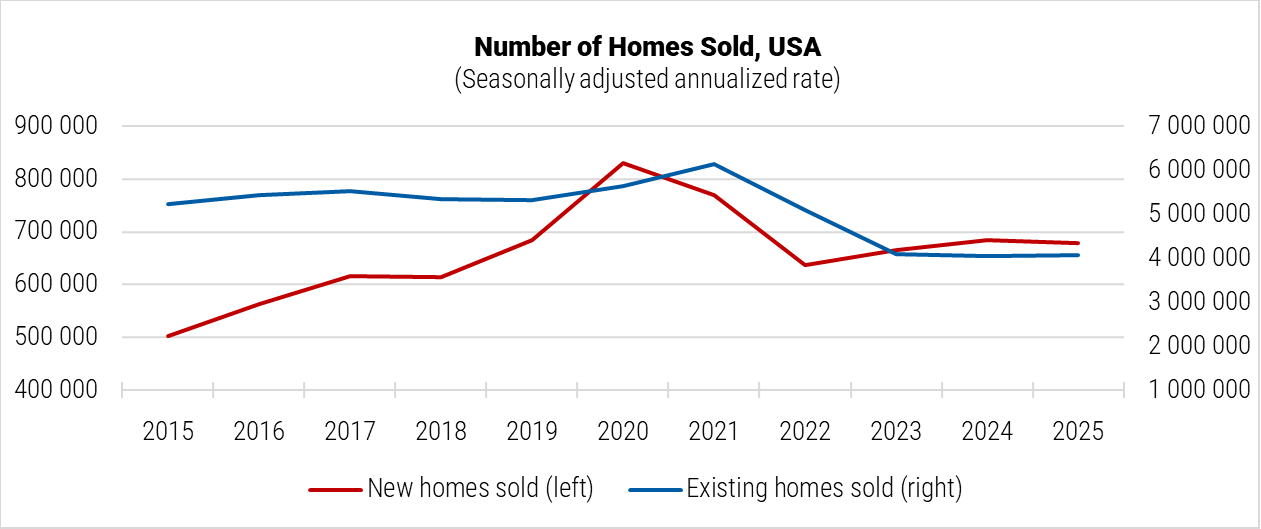
Demand in the US housing market remained subdued in 2025, as elevated mortgage rates and still-high home prices continued to weigh on affordability and suppress turnover. Existing home sales averaged 4.08 million units on a seasonally adjusted annualized basis (SAAR) in 2025, up a marginal 0.6% year-on-year, suggesting that activity largely stabilized at a weak level. Conditions softened further going into 2026. According to NAR, existing-home sales fell to 3.98 million units SAAR in March 2026, down 3.6% month-on-month and 1.0% year-on-year. Lawrence Yun, NAR’s Chief Economist, said that lower consumer confidence and softer job growth continued to hold back buyers, while limited inventory remained a major constraint on market activity.
The new-home market also remained subdued, with sales slipping modestly in 2025 and weakening further at the start of 2026. Sales of newly built single-family homes averaged 679,000 units on a seasonally adjusted annualized basis in 2025, down 0.9% year-on-year. The latest official Census Bureau release, covering January 2026, showed new home sales falling to 587,000 units SAAR, down 17.6% from December and 11.3% from a year earlier. Industry commentary indicates that demand for new homes continues to be constrained by high financing costs, affordability pressures, downpayment hurdles, and broader economic uncertainty. As NAHB Chief Economist Robert Dietz noted in March, these factors were likely to remain headwinds even as mortgage rates eased somewhat from late-2025 levels.
Data Source: National Association of Homebuilders (NAHB), based on the compilation of data from the US Census Bureau and the NAR.
Foreign demand strengthened, albeit from a low base. According to NAR’s latest annual survey, covering April 2024 to March 2025, foreign buyers purchased 78,100 existing US homes, up 43.8% year-on-year and marking the first annual increase since 2017. Even so, this remained the second-lowest level since NAR began tracking foreign purchases in 2009. The total dollar volume of foreign purchases increased 33.3% to USD 56.0 billion, while the average purchase price declined 7.9% to USD 719,000. Yun said the rebound reflected a recovery in international activity after several years of pandemic-related disruption, although high home prices and borrowing costs continued to keep foreign demand below pre-pandemic norms. China and Canada remained the two largest source markets, while Florida, California, and Texas continued to attract the largest share of foreign-buyer activity.
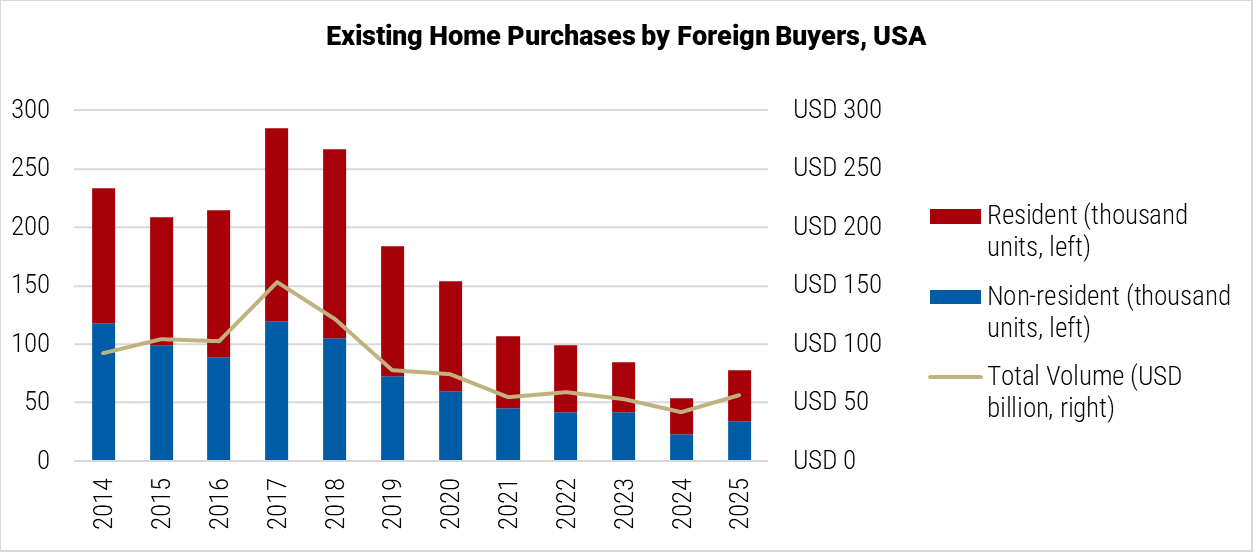
Note: Reporting years are April through March, as specified by the NAR.
Data Source: NAR.
In April 2026, NAR revised down its housing forecast and now expects existing-home sales to rise 4% this year, while new-home sales are projected to remain flat, citing the renewed upward pressure on mortgage rates. Fannie Mae’s April 2026 Housing Forecast is similarly cautious, projecting existing-home sales of 4.123 million units in 2026, up 1.2% year-on-year, followed by a stronger 8.3% increase to 4.466 million units in 2027. New single-family home sales are expected to remain broadly flat at 678,000 units in 2026 before rising 3.1% to 700,000 units in 2027.
Property Supply Trends
Housing Supply Remains Constrained Despite January Starts Rebound
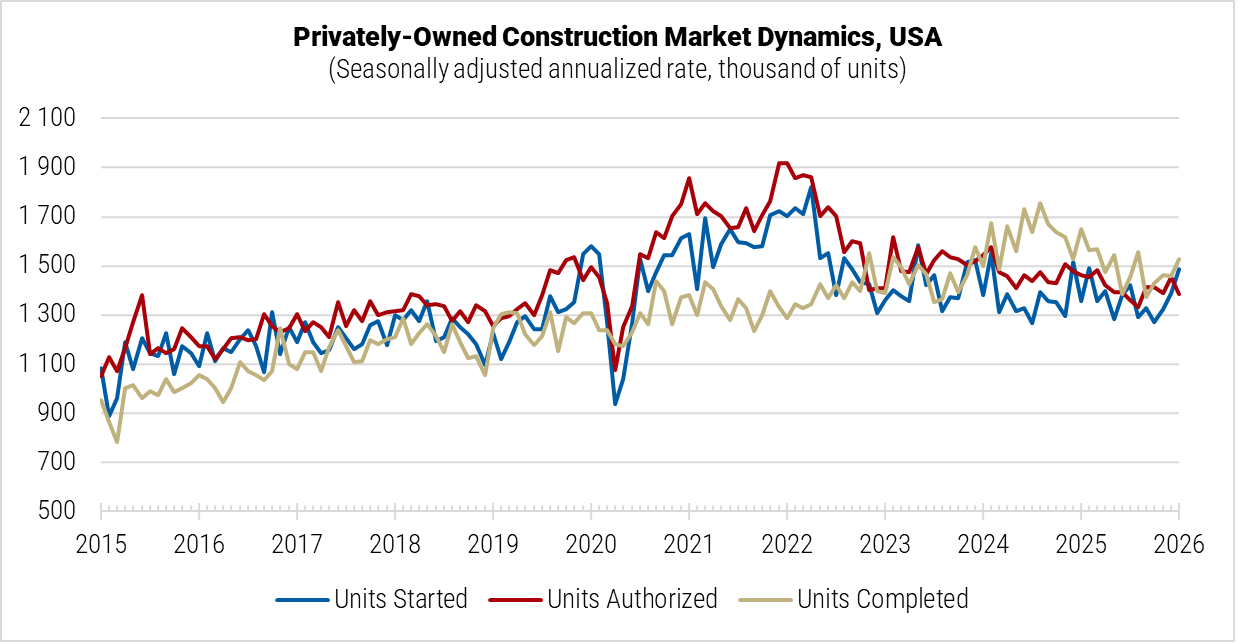
The US housing supply picture remained constrained in early 2026, despite a January rebound in headline housing starts. New construction continued to face pressure from elevated financing costs, high construction and input costs, tariff-related uncertainty, labor and land constraints, and softer buyer demand. As a result, supply growth remained insufficient to materially ease the country’s long-standing housing shortage.
According to preliminary data from the US Census Bureau, privately-owned housing starts reached 1,487,000 units SAAR in January 2026, up 7.2% from December and 9.5% year-on-year. However, the rebound in starts was not matched by permitting activity, with building permits falling to 1,376,000 units SAAR, down 5.4% month-on-month and 5.8% year-on-year. At the same time, housing completions stood at 1,527,000 units SAAR, up from December but still 7.5% below the January 2025 level, pointing to weaker year-on-year delivery.
Industry commentary points to a still-fragile construction environment. KPMG Senior Economist Matthew Nestler argued that there was no real recovery in the housing market in 2025, despite the late-year uptick in construction indicators, as builders continued to face rising construction costs, tariffs, and economic uncertainty, and hesitant buyers. KPMG therefore expects residential investment to remain subdued in 2026.
Data Source: US Census Bureau.
Builder sentiment also remained weak as the spring selling season began. The NAHB/Wells Fargo Housing Market Index fell to 34 in April 2026, its lowest level since September 2025 and well below the neutral benchmark of 50. The decline reflected continued pressure from elevated interest rates, rising building material costs, and broader economic uncertainty. According to NAHB, higher fuel costs were feeding into supplier prices, further complicating builders’ ability to price homes amid volatile material costs.
At the same time, the underlying supply shortage remains structural. Realtor.com estimates that the US housing supply gap widened to 4.03 million homes in 2025, up from 3.8 million in 2024, as new construction again failed to keep pace with household formation and pent-up demand. “A supply gap exceeding 4 million homes underscores how deeply rooted the shortage has become,” said Realtor.com Chief Economist Danielle Hale.
The near-term outlook suggests only limited improvement. Fannie Mae’s April 2026 forecast projects total housing starts to edge down by 1.4% year-on-year to around 1.34 million units in 2026. NAHB’s outlook is also cautious, pointing to only modest growth in single-family construction and further softening in multifamily starts amid tight financing conditions, high development costs, and post-boom normalization in apartment development.
Rental Market: Rents and Rental Yields
Rental Inflation Slows Further, Dynamic Uneven Across Largest Metro Areas
As of Q4 2025, the homeownership rate in the US stood at 65.7%, virtually unchanged from the same period a year ago, indicating a consistently high share of the population renting rather than owning their residence. Also pointing to sustained tenant demand, the nationwide vacancy level for rental properties remains relatively low, most recently reported by the US Census Bureau at 7.2% in Q4 2025. Regionally, the lowest vacancy was observed in the Northeast at 5.2%, followed by the West at 5.5%, and the Midwest (7.2%), while the rate for the South stood above the national average at 9.1%.
The United States rent price index:
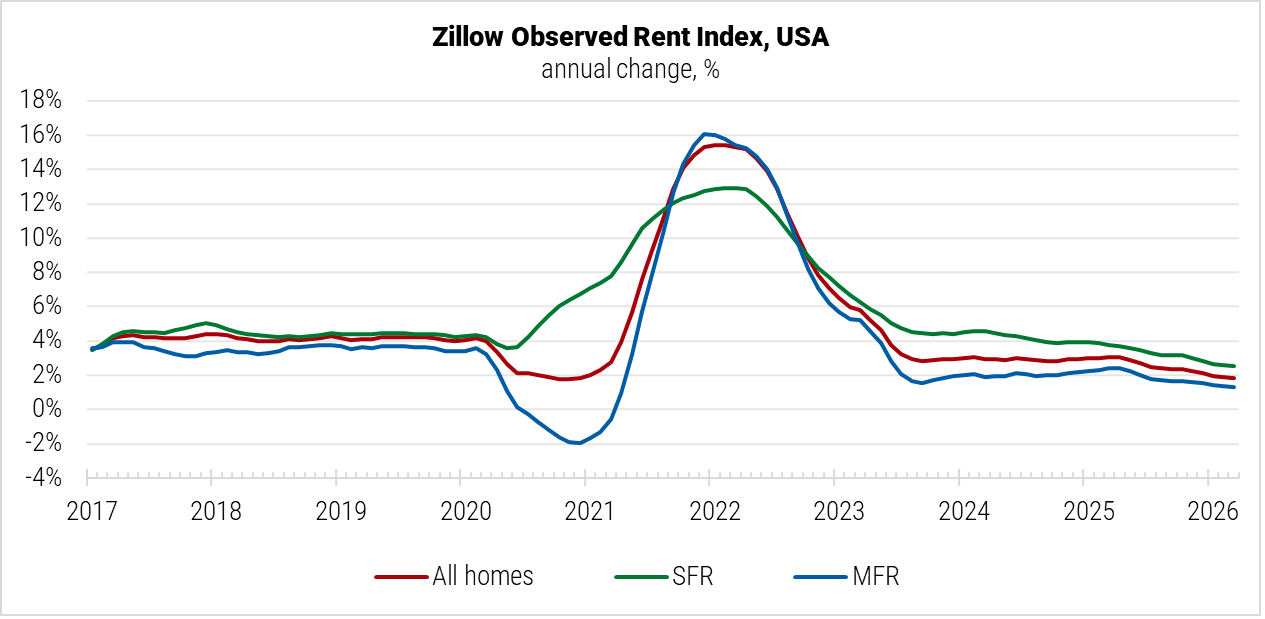
At the same time, based on the dynamic of nationwide indices, rental inflation in the US has continued to ease, albeit gradually, after a period of accelerated growth and the subsequent rapid slowdown in the previous years. The rent of primary residence component of the Consumer Price Index for All Urban Consumers (CPI-U) reported by the Bureau of Labor Statistics increased by 2.6% year-on-year in March 2026, a much more moderate growth compared to 4.0% reported during the same period a year earlier and the peak level of 8.8% annual growth in March 2023.
In a similar pattern, the Zillow Observed Rent Index, compiled by the popular real estate platform, showed a 1.8% year-on-year increase in asking rents in March 2026, a slowdown from 3.1% growth rate in March 2025 and the peak level of 15.4% annual increase registered in early 2022.
Based on Zillow data, rents in the single-family residential segment (SFR) continue to outpace those in the multifamily residential segment (MFR), the respective sub-indices registering a 2.5% and a 1.3% year-on-year increase in March 2026. Among the 20 largest metro areas, the most pronounced annual growth was observed in San Francisco (6.4%), followed by Chicago (5.6%), and New York (4.2%), while asking rents in Tampa, Denver, Houston, Phoenix, Dallas, and Washington, DC metro areas registered annual declines between 1.6% and 0.1%.
“Across both segments [SFR and MFR], rent growth is running below income growth, easing the financial pressure renters have faced since the pandemic-era surge. <…> Affordability is beginning to recover and move closer to historical norms,” said the March 2026 rental market report from Zillow.
Data Source: Zillow.
The moderation of rental growth across the country is also reflected in the nationwide median asking rent for vacant units, which was reported by the US Census Bureau at USD 1,464 as of Q4 2025, down from USD 1,475 reported in Q4 2024. The indicator also demonstrated year-on-year decreases in two out of four US macro-regions, with the upward dynamic reported only for the Midwest and the West.
As for gross rental yields for residential units in the US, research carried out by Global Property Guide in December 2025 found them averaging 6.56%, up from 6.51% previously reported in July 2025 and 6.10% in August 2024. Regional performance varied, with the highest potential performance among the assessed submarkets seen in Houston (8.92%), followed by Philadelphia (8.42%), Chicago (8.28%), and Orlando (8.12%). New York, Los Angeles, Seattle, and Boston remained at the lower end of the spectrum, all with yields below 5%.
Median asking rent, by region:
| Median Asking Rent, Q4 2025 |
YoY, % Q4 2025 vs Q4 2024 |
|
| Northeast | USD 1,483 | -13.9% |
| Midwest | USD 1,292 | 13.6% |
| South | USD 1,410 | -1.3% |
| West | USD 1,848 | 3.4% |
| Data Source: US Census Bureau. | ||
Mortgage Market and Interest Rates
Recovery Still Fragile as Interest Rates Remain Elevated
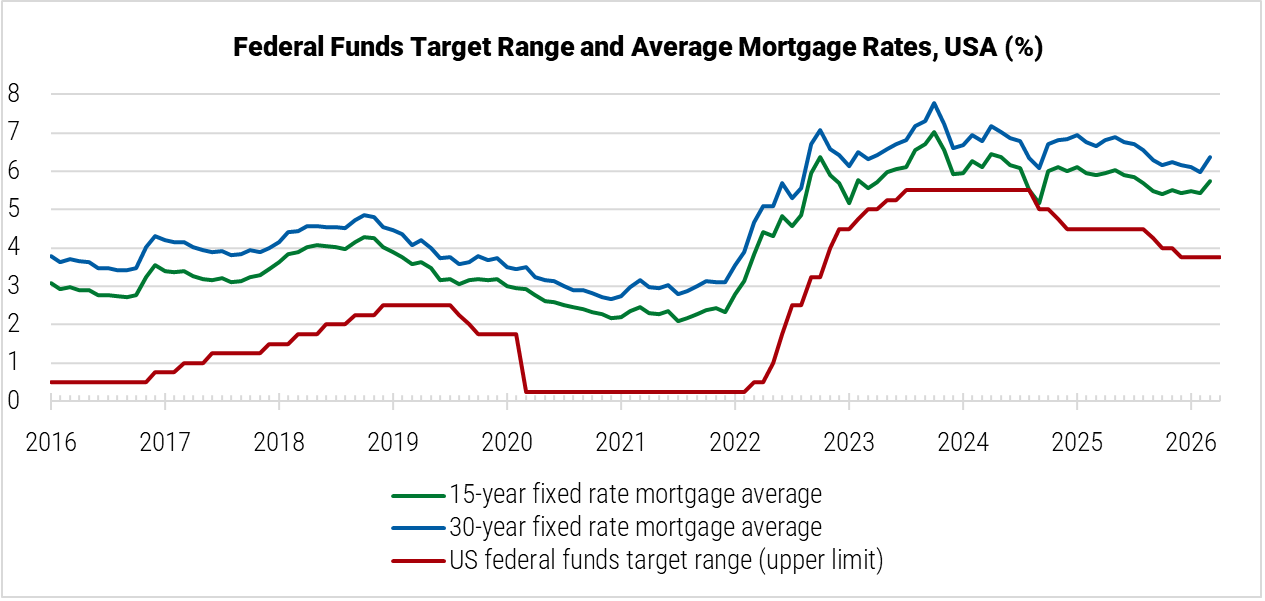
After three quarter-point cuts in the second half of 2025, which lowered the target range for the federal funds rate (FTTR) to 3.50-3.75%, the US Federal Reserve has maintained a cautious monetary policy stance, making no further moves in recent months. At the March 2026 meeting, the Federal Open Markets Committee (FOMC) once again voted to keep the policy rate range unchanged, noting that the situation in the labor market hasn’t shown improvements and inflation remains “somewhat elevated”, while the implications of developments in the Middle East for the US economy are uncertain, and the overall uncertainty about the economic outlook is heightened.
The United States mortgage loan interest rates:
Considering the inflationary risks arising from the Middle East conflict, the current policy rate setting is now expected to remain in place for some time. Most economists polled by Reuters in April 2026 believe rate cuts have been pushed back, likely to late 2026 or even later. Similarly, the latest forecast from Deloitte now expects the Federal Reserve to hold rates steady until December and deliver the second and final cut of the cycle in Q1 2027. “Although the next Fed chair [expected to take office in May 2026] will likely be more dovish than the outgoing one, this is unlikely to change the majority vote of the Federal Open Market Committee,” said Deloitte.
In line with the FTTR trajectory, the bank prime loan rate, which typically serves as a benchmark for various lending products, including adjustable-rate mortgages, has been stable at 6.75% since December 2025. As for fixed-rate loans, the average interest rates on mortgages tracked by Freddie Mac have remained elevated, declining by less than half a point over the last two years. At the end of March 2026, the average interest rate stood at 5.75% for 15-year fixed-rate mortgages and 6.38% for 30-year fixed-rate mortgages, both indicators still notably above pre-2022 levels. The revised housing market forecast from Fannie Mae now predicts rates for 30-year mortgages will remain above 6% throughout 2026 and 2027.
Interest rates on mortgages:
| Average Interest Rate, March, 2026 |
YoY | Average Interest Rate, March, 2025 |
YoY | Average Interest Rate, March, 2024 |
|
| 15-year FRM | 5.75% | ↓ | 5.89% | ↓ | 6.11% |
| 30-year FRM | 6.38% | ↓ | 6.65% | ↓ | 6.79% |
| Note: End-of-month values. | |||||
| Data Source: Freddie Mac. | |||||
Data Sources: FRED, Freddie Mac.
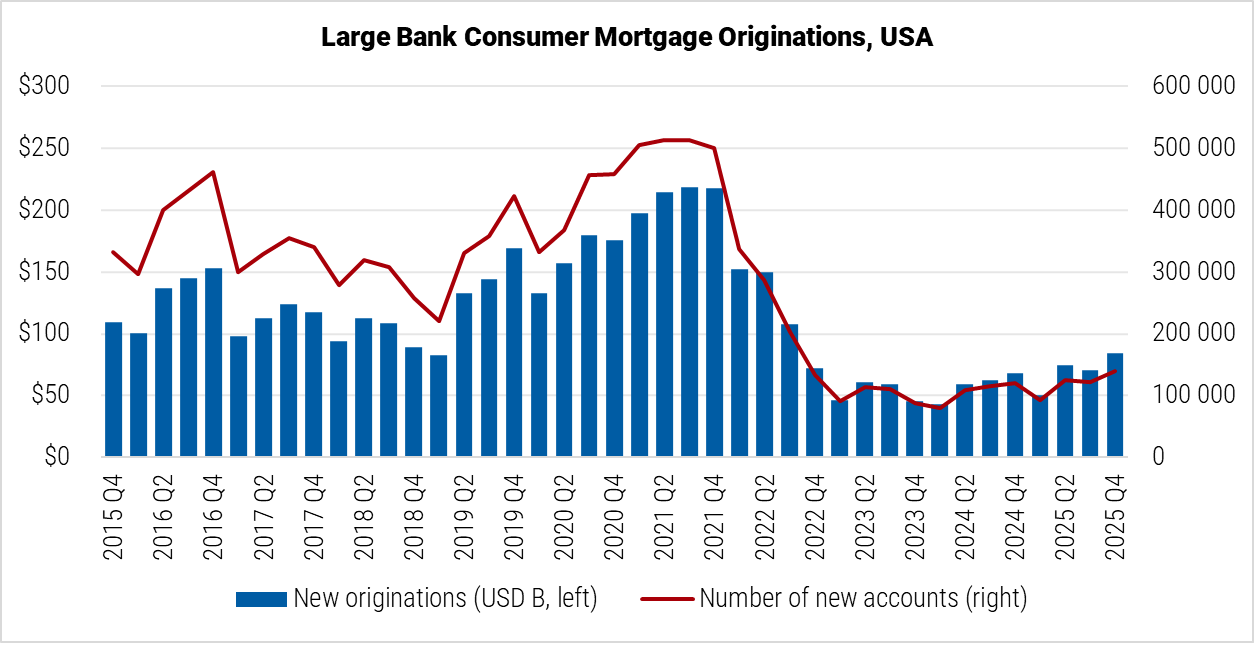
Although modest, further interest rate easing from 2023 peak levels continued to support growth in new mortgage loan originations at large banks, with especially increased activity observed in refinancing. According to data from the Federal Reserve Bank of Philadelphia, in 2025, large banks reported 478,330 new mortgage accounts (12.9% year-on-year) with a corresponding loan value of USD 280.5 billion (20.1% year-on-year). These levels, however, are still substantially lower than pre-2022 benchmarks, and market recovery is fragile, with demand for loans highly sensitive to interest rate fluctuations.
Data Source: Federal Reserve Bank of Philadelphia.
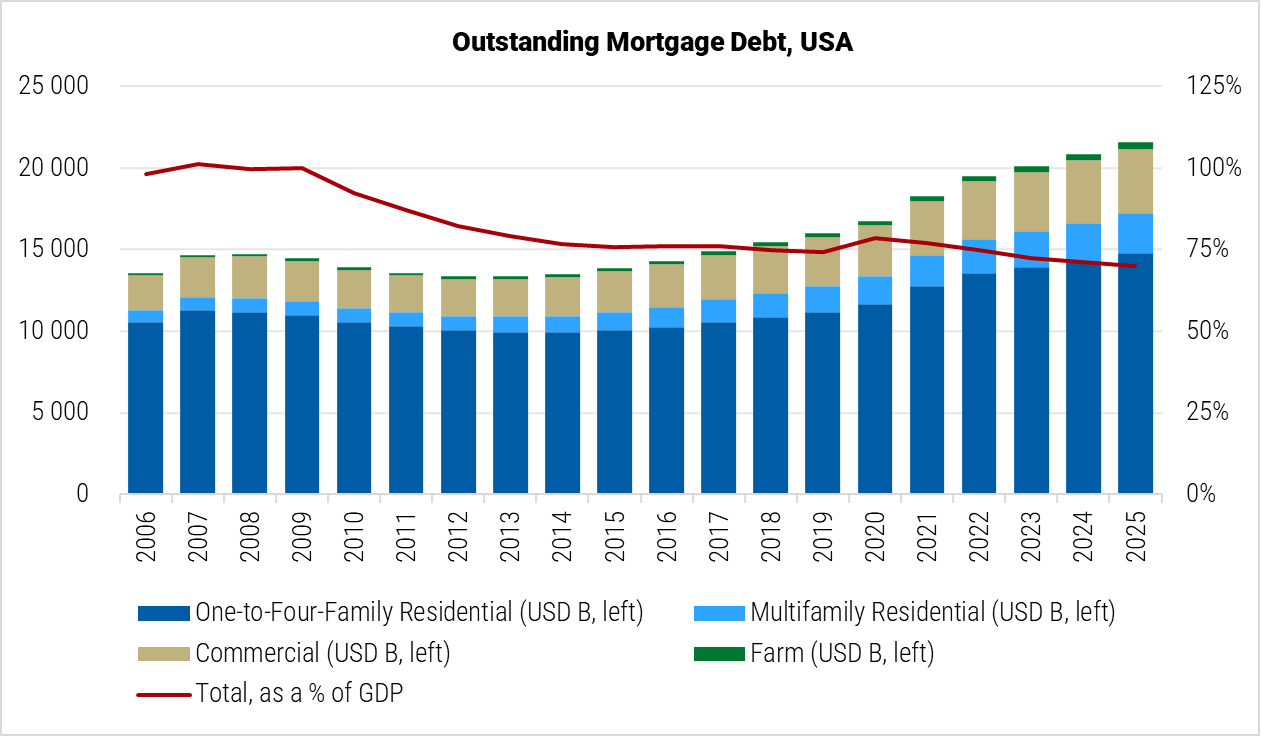
In this environment, the overall size of the US housing loan market continues to show moderate growth. Based on Federal Reserve data published by FRED, in 2025, the total value of outstanding mortgage debt of US households increased by 3.5%, reaching USD 21.6 trillion. Of the combined stock, the largest share (68.5%) was represented by loans on one-to-four-family residential properties, followed by commercial properties (18.4%), multifamily residential (11.3%), and farms (1.8%). Sized against the US economy, the mortgage market continued to gradually shrink, estimated to equal 70.1% of GDP at current prices in 2025, down from 75.8% in 2015 and 93.0% in 2005.
Data Sources: FRED, IMF.
Economic and Social Factors
Slower Growth and Delay in Inflation Normalization
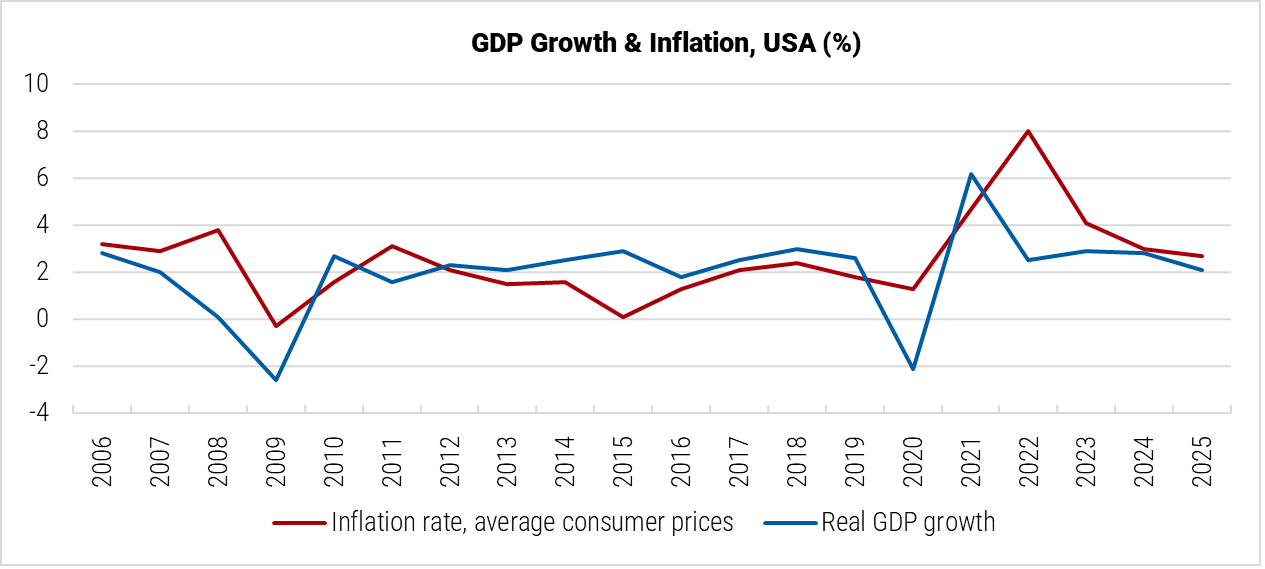
Despite major shifts in the policy environment since the new administration took office in January 2025, the US economy performed relatively well last year, with real GDP growth, although slowing from 2023 and 2024, estimated at a solid 2.1% by the International Monetary Fund (IMF). The momentum is projected to be sustained at similar levels over the next two years, growth reaching 2.3% in 2026 and 2.1% in 2027. As noted by the IMF in the 2026 Article IV staff report, “the combination of the changes in tax, spending and tariffs, alongside reduced immigration inflows, will create a modest drag on activity over the medium term.” Similarly, Deloitte’s baseline scenario sees a 2.2% expansion in 2026, with the growth rate shifting to its potential of about 1.7% by 2030.
Inflation in the country previously eased from an annual average of 8.0% in 2022 to 3.0% in 2024 and 2.7% in 2025, mostly moving sideways throughout last year, as tariffs boosted goods prices while services inflation moderated. More recently, however, on the back of higher energy prices, the US Bureau of Labor Statistics reported a 3.3% increase in the Consumer Price Index for All Urban Consumers (CPI-U) over twelve months to March 2026. The IMF forecasts the annual inflation level to reach 3.2% in 2026, before easing to 2.1% in 2027, as inflationary impulse from tariffs wanes and oil prices come down from their currently elevated levels. Deloitte also expects higher inflation in 2026 but assumes energy prices will begin to decline again by the fourth quarter of this year.
Data Source: IMF.
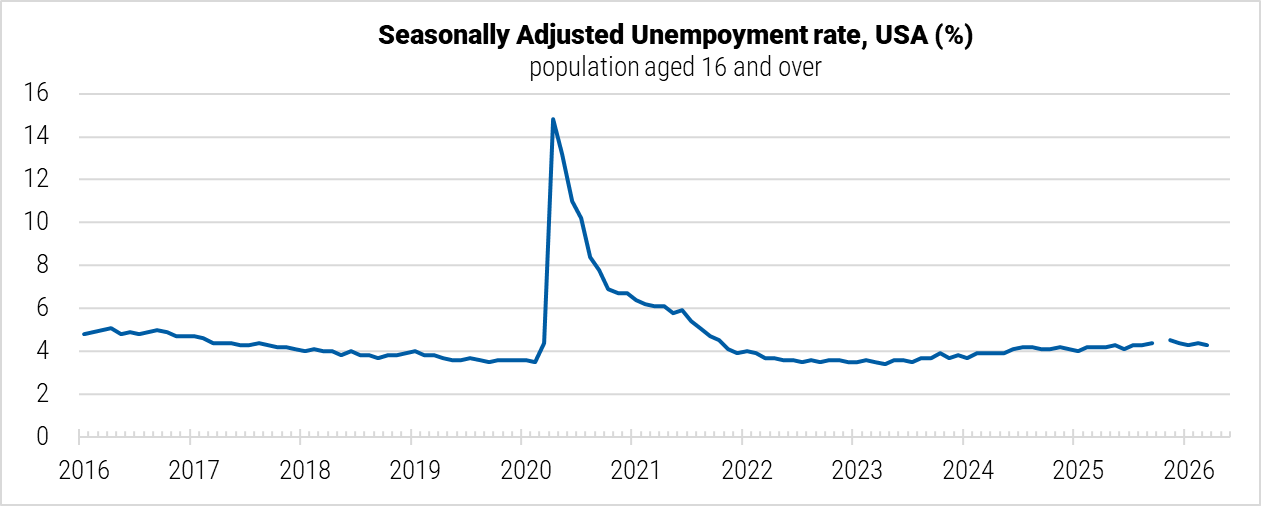
In the US labor market, the nationwide unemployment rate dropped significantly after the pandemic but has picked up since, most recently reported by the US Bureau of Labor Statistics at 4.3% in March 2026, compared to 4.2% a year ago and 3.9% two years ago.
At the same time, the administration’s immigration actions continue to reshape the market, as stricter border enforcement has effectively halted the inflow of unauthorized migrants, constraining labor force growth and leading to a notable slowdown in employment gains. As outlined in the IMF staff report, “outside of a recession, employment growth in 2025 was at the slowest pace seen since 2003”. As lower labor supply filters through to the broader economy in the coming years, it is expected to raise wages of lower-skilled workers, add modestly to inflation, and slow activity.
Data Source: US Bureau of Labor Statistics via FRED.
In public finances, the US federal government’s budget has run a deficit every year since 2001. While a significant rise in revenues narrowed the fiscal deficit from 6.3% of GDP in 2024 to 5.9% in 2025, it is set to remain high by historic standards. A ten-year budget and economic outlook published by the Congressional Budget Office (CBO) projects the adjusted federal budget deficit in fiscal year 2026 to reach USD 1.9 trillion (equal to 5.8% of GDP). By 2036, the adjusted deficit is expected to equal 6.7% of GDP — significantly more than the 3.8% average over the past 50 years. Relative to the size of the economy, debt held by the public is also expected to swell further, increasing from 101% of GDP in 2026 to 120% in 2036.
Against this background, the United States previously experienced a downgrade in sovereign credit rating, with all three major credit agencies, Fitch, Moody’s, and Standard & Poor’s (S&P), now rating US debt below the top-tier ‘AAA’ level for the first time in modern history.
The overall outlook for the US is of moderate growth and high uncertainty, with the economy transitioning into a slower, more vulnerable phase, where outcomes will depend heavily on inflation dynamics, Federal Reserve policy, and geopolitical developments, including the implications of events in the Middle East.
Sources:
- US Census Bureau
- Monthly New Residential Construction, January 2026: https://www.census.gov/
- Monthly New Residential Sales, January 2026: https://www.census.gov/
- Quarterly Residential Vacancies and Homeownership, Fourth Quarter 2025: https://www.census.gov/
- US Bureau of Labor Statistics
- Employment Situation: https://www.bls.gov/
- Consumer Price Index: https://www.bls.gov/
- US Federal Reserve Board
- Federal Reserve Issues FOMC Statement, 18 March 2026: https://www.federalreserve.gov/
- Congressional Budget Office (CBO)
- An Update to the Budget and Economic Outlook: 2026 to 2036: https://www.cbo.gov/
- Federal Reserve Economic Data (FRED)
- Bank Prime Loan Rate: https://fred.stlouisfed.org/
- Federal Funds Target Range - Upper Limit: https://fred.stlouisfed.org/
- Mortgage Debt Outstanding: https://fred.stlouisfed.org/
- Federal Reserve Bank of Philadelphia
- Q4 2025 Insights Report: https://www.philadelphiafed.org/
- Large Bank Credit Card and Mortgage Data: https://www.philadelphiafed.org/
- FiscalData
- US Revenue Data https://fiscaldata.treasury.gov/
- US Deficit by Year: https://fiscaldata.treasury.gov/
- Freddie Mac
- Mortgage Rates: https://www.freddiemac.com/
- Fannie Mae
- Housing Forecast: April 2026: https://www.fanniemae.com/
- National Association of Realtors (NAR)
- Summary of January 2026 Existing-Home Sales Statistics: https://www.nar.realtor/
- Existing-Home Sales Housing Snapshot, Mar 2026: https://www.nar.realtor/
- 2025 International Transactions in U.S. Residential Real Estate: https://cms.nar.realtor/
- NAR Existing-Home Sales Report Shows 3.6% Decrease in March: https://www.nar.realtor/
- National Association of Home Builders (NAHB)
- Builders Respond to Affordability Challenges with Buyer Incentives and Innovative Designs: https://www.nahb.org/
- Builder Sentiment Inches Higher but Affordability Concerns Persist: https://www.nahb.org/
- Builder Sentiment Posts Notable Decline on Economic Uncertainty: https://www.nahb.org/
- 2026 Housing Outlook: Ongoing Challenges, Cautious Optimism and Incremental Gains: https://www.nahb.org/
- International Monetary Fund (IMF)
- Country Overview: United States: https://www.imf.org/
- 2026 Article IV Staff Report: https://www.imf.org/
- European Commission
- Economic Forecast for the United States: https://economy-finance.ec.europa.eu/
- Organization for Economic Co-operation and Development (OECD)
- OECD Economic Outlook, Interim Report March 2026: https://www.oecd.org/
- Zillow
- Rental Market Report, March 2026: https://www.zillow.com/
- S&P Dow Jones Indices
- S&P Cotality Case-Shiller Index Reports Annual Gain in January 2026: https://www.spglobal.com/
- Deloitte
- United States Economic Forecast 2026-2030, March 2026: https://www.deloitte.com/
- EY
- US Economic Outlook November 2025: https://www.ey.com/
- KPMG
- Housing Starts Spiked at the End of 2025: https://kpmg.com/
- Fitch Ratings
- Fitch Affirms the United States of America at 'AA+'; Outlook Stable: https://www.fitchratings.com/
- Moody’s Ratings
- Moody's Ratings Downgrades United States Ratings to Aa1 from Aaa; Changes Outlook to Stable: https://ratings.moodys.com/
- Reuters
- US Home Prices to Crawl Higher as 30-Year Mortgage Rates Stick Near 6%: Reuters Poll: https://www.reuters.com/
- Fed Rate Cut Pushed Back to Late 2026 on War-Related Inflation Risks: Reuters Poll: https://www.reuters.com/
- US Labor Market Posts Largest Jobs Gain in 15 Months, but Clouds Brewing From Iran War: https://www.reuters.com/
- Iran War Poses New Risk to US Economic Resilience: https://www.reuters.com/
- Realtor.com
- Outstanding Mortgage Payments Reach New High: https://www.realtor.com/
- Housing Supply Gap Exceeds 4 Million Homes in 2025: https://www.realtor.com/